ECTN vs Certificate of Origin: What's the Difference and Do You Need Both?
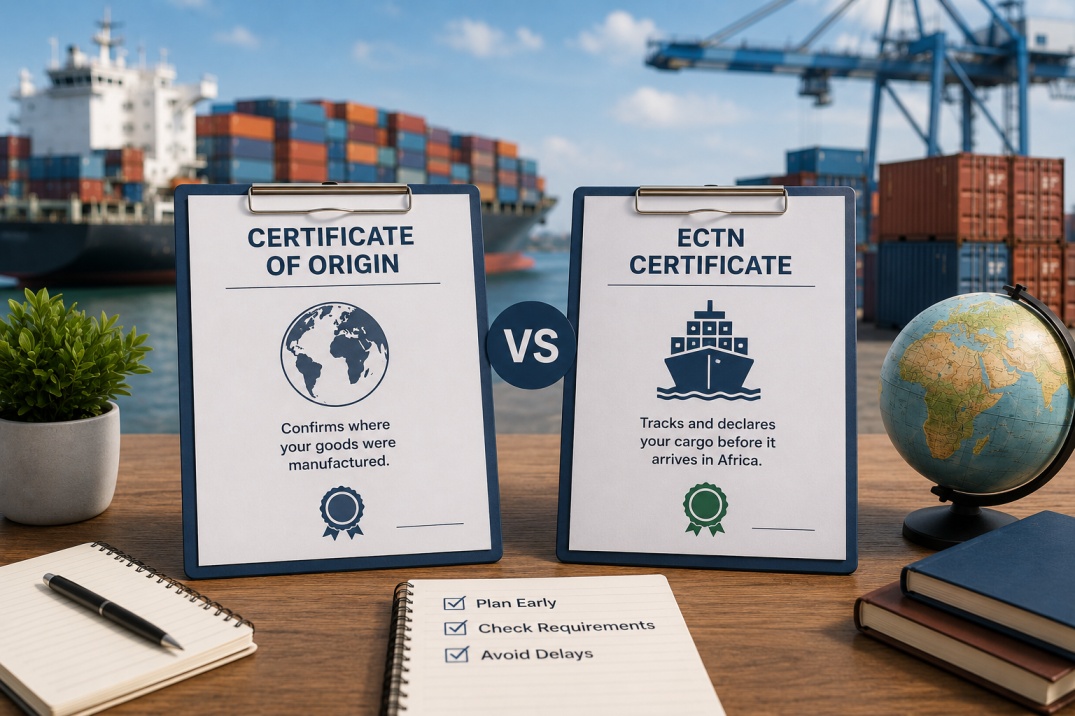
If you export goods regularly, you have probably come across both the ECTN certificate and the certificate of origin. These two documents are easy to confuse since both are required for international shipping, but they serve completely different purposes. In this guide, we will break down what each one does, why both matter, and when you actually need them.
What Is a Certificate of Origin
A certificate of origin confirms where your goods were manufactured or produced. Customs authorities use this document to apply the correct import duties, check trade agreements, and confirm that your shipment follows origin based regulations. It answers one simple question, where did this product actually come from.
This certificate is usually issued by a chamber of commerce or a relevant trade authority in your country.
What Is an ECTN Certificate
An ECTN certificate works differently. Instead of confirming where your goods came from, it tracks your cargo details before it reaches the destination port. Many African countries require this certificate as part of their cargo monitoring system, and without it, your shipment cannot be cleared through customs.
If you want to understand this certificate in more detail, our ECTN definition page walks through exactly what it covers and why it matters for African bound shipments.
Key Differences Between the Two
Though both documents support smooth customs clearance, they are not interchangeable. Here is how they differ.
Purpose. A certificate of origin proves where your goods were made. An ECTN certificate tracks and declares your cargo before it arrives at the destination port.
Who requires it. Certificates of origin are widely used across global trade for tariff and trade agreement purposes. ECTN certificates are specifically required by certain African countries as part of their cargo tracking system.
Who issues it. A certificate of origin usually comes from a chamber of commerce. An ECTN certificate is issued by an authorized ECTN provider working with the destination country's tracking system.
What happens without it. Missing a certificate of origin can affect duty calculations or trade benefits. Missing an ECTN certificate can block your cargo from clearing customs entirely.
Do You Need Both for the Same Shipment
In many cases, yes. If you are exporting to an African country that requires ECTN, and your goods also need a certificate of origin for duty or trade purposes, you will need both documents prepared correctly. They serve different roles in the same shipment, so having one does not remove the need for the other.
This is why it helps to plan both documents early, rather than assuming one covers the other.
A Simple Way to Remember the Difference
Think of the certificate of origin as answering the question of where your goods came from. Think of the ECTN certificate as answering the question of what is being shipped and how it is being tracked on its way to Africa. Both answer different questions, and customs officials check for both separately.
Why Getting This Right Matters
Confusing these two documents, or assuming one replaces the other, is a common mistake among new exporters. This mix up can lead to unnecessary delays at the port, since customs will ask for whichever document is missing.
Working with a provider who understands both requirements helps you avoid this confusion altogether. At Seanautic Marine Inc, we regularly guide exporters and freight forwarders through the ECTN process, and we make sure clients understand exactly what other documents their shipment may need alongside it.
Tips for Managing Both Documents Smoothly
Keep a simple checklist for every shipment so you know which documents are required for your specific destination. Start both processes early, since certificate of origin approval and ECTN certificate processing can happen around the same time if planned well. And whenever you are unsure which documents your shipment needs, ask your provider before your goods are ready to load, not after.
Final Thoughts
The certificate of origin and the ECTN certificate serve two very different purposes, even though they both play a role in getting your shipment through customs smoothly. Understanding this difference helps you prepare the right documents from the start, instead of scrambling to fix gaps at the last moment. When in doubt, a good provider can guide you through exactly what your shipment needs.
If you want help understanding what your next shipment requires, our team is ready to walk you through it.
Not sure which documents your shipment needs? Contact Seanautic Marine Inc today for clear guidance and fast processing.
Frequently Asked Questions (FAQ's)
Find answers to common questions.
