ECTN Certificate Requirements for Central African Republic and Republic of Congo
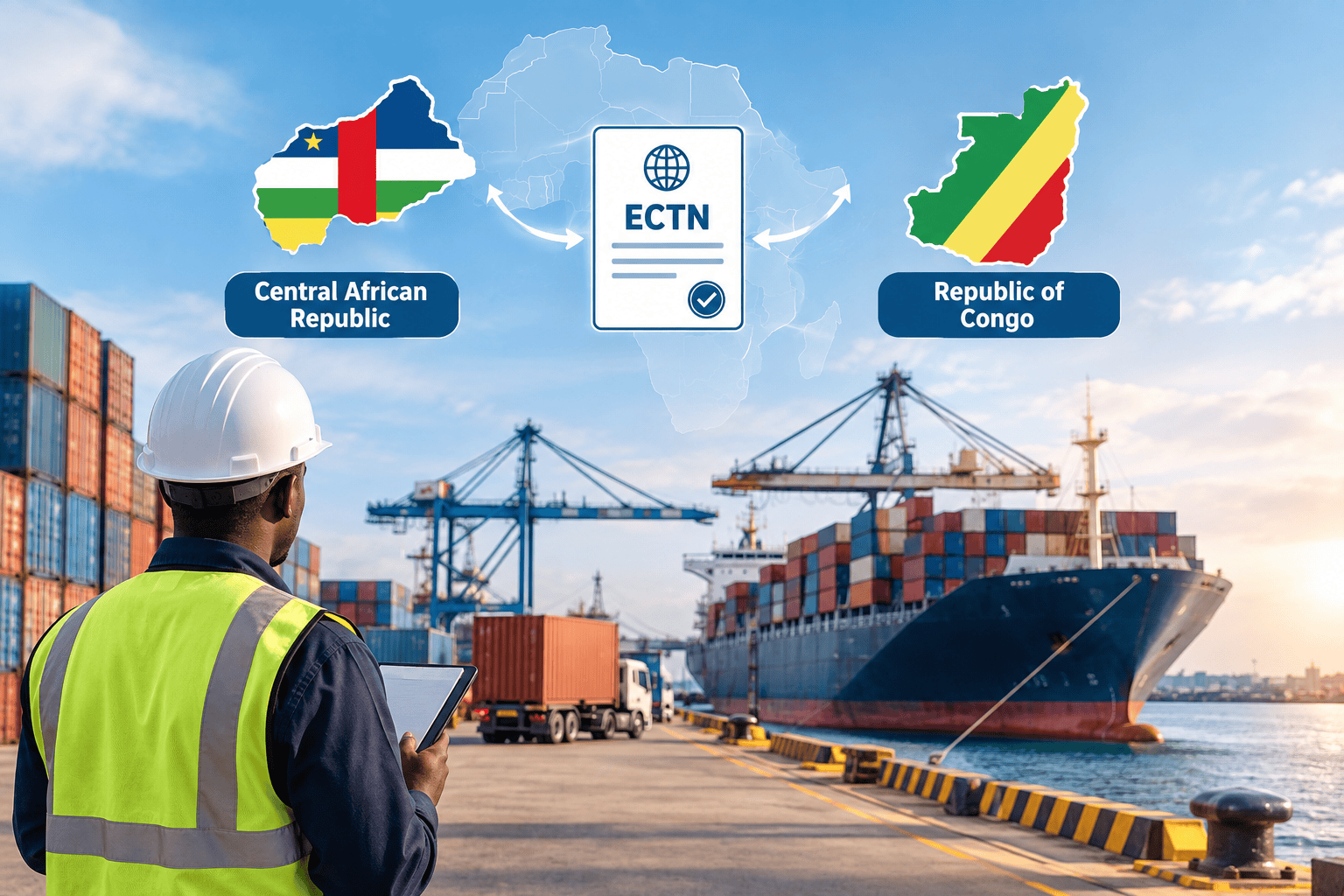
Picture this. You have a shipment heading to Central African Republic and another one heading to Republic of Congo. Both need an ECTN certificate before customs will clear them, but the small details for each destination are not exactly the same. In this position, knowing what applies to each country ahead of time saves you from confusion once your cargo is already on its way.
This guide walks through both situations so you know exactly what to prepare, whichever destination you are shipping to.
What an ECTN Certificate Actually Does
In this case, it helps to start with the basics. An ECTN certificate, also known as the electronic cargo tracking note, is a document that confirms your cargo details before your shipment arrives at an African port. It records what is being shipped, who is sending it, and who is receiving it, giving customs authorities a clear record ahead of arrival. Without this certificate, your shipment can be held at the port until the paperwork is sorted out, which means lost time and added costs.
This requirement applies across many African countries, including both destinations we are focusing on here.
When You Are Shipping to Central African Republic
Here is when this becomes relevant. If your cargo is heading into this landlocked nation, Central African Republic ECTN requirements apply before your shipment can move forward. In this situation, goods typically arrive through a neighboring country's port before being transported overland, so having your ECTN certificate ready early becomes even more important. Delays here do not just affect the port, they can affect the entire inland transport chain that follows.
In this case, you will need your commercial invoice, freight invoice, and bill of lading ready before applying. These documents confirm your cargo details and allow your certificate to be processed accurately for this destination.
When You Are Shipping to Republic of Congo
In this position, the process looks similar but applies directly to cargo arriving at the country's own ports. Republic of Congo ECTN follows the same overall structure, and as with Central African Republic, your commercial invoice, freight invoice, and bill of lading form the foundation of your application.
One detail worth knowing here is that requirements can shift slightly depending on cargo type, so in this case it helps to confirm the exact details for your shipment rather than assuming the same process applies to every load.
When These Two Destinations Overlap
This is where things get interesting. Central African Republic and Republic of Congo are often grouped together because of their regional proximity and overlapping trade routes. In this situation, however, their ECTN processes are not identical. Central African Republic's landlocked position adds an extra layer of coordination, since cargo often passes through Congo's ports before reaching its final destination.
Understanding this connection helps exporters plan their documentation more accurately, especially when a single shipment involves transit through more than one country.
Where Most Mistakes Happen
A few situations tend to repeat across shipments to both destinations. Applying too close to departure leaves little room for corrections if something is wrong. Sending mismatched details across your invoice and bill of lading is another frequent issue that slows down approval. And in this case, assuming the process for one country automatically applies to the other can create unnecessary confusion, especially given the transit relationship between the two.
How to Handle This Smoothly
In every situation like this, a few habits make the process easier. Start your ECTN certificate application as soon as your booking is confirmed, whether you are shipping to Central African Republic, Republic of Congo, or elsewhere in the region. Double check that your commercial invoice, freight invoice, and bill of lading match each other exactly. And when your shipment involves transit through more than one country, confirm the documentation needed at each stage rather than assuming one certificate covers the entire route.
Why Seanautic Marine Inc Fits This Situation
When exporters find themselves needing guidance for either destination, this is where Seanautic Marine Inc comes in. Our team supports exporters and freight forwarders shipping to Central African Republic, Republic of Congo, and more than 20 other African countries. We personally review your documents, confirm the correct requirements for your specific route, and keep communication clear from start to finish.
This kind of regional understanding matters most when your shipment needs to move through more than one country before reaching its final destination.
Final Thoughts
In this case, both Central African Republic and Republic of Congo require an ECTN certificate, but the details behind each process are not identical, especially given how closely their trade routes are connected. Starting early, keeping your documents consistent, and working with a provider who understands both markets are the simplest ways to avoid delays.
If you find yourself in this position, our team is ready to help you move forward with confidence.
Shipping to Central African Republic or Republic of Congo? Contact Seanautic Marine Inc today for accurate ECTN certificate processing.
Frequently Asked Questions (FAQ's)
Find answers to common questions.
