Shipping to Madagascar, Mali, and Niger: What You Need to Know About ECTN Certificates
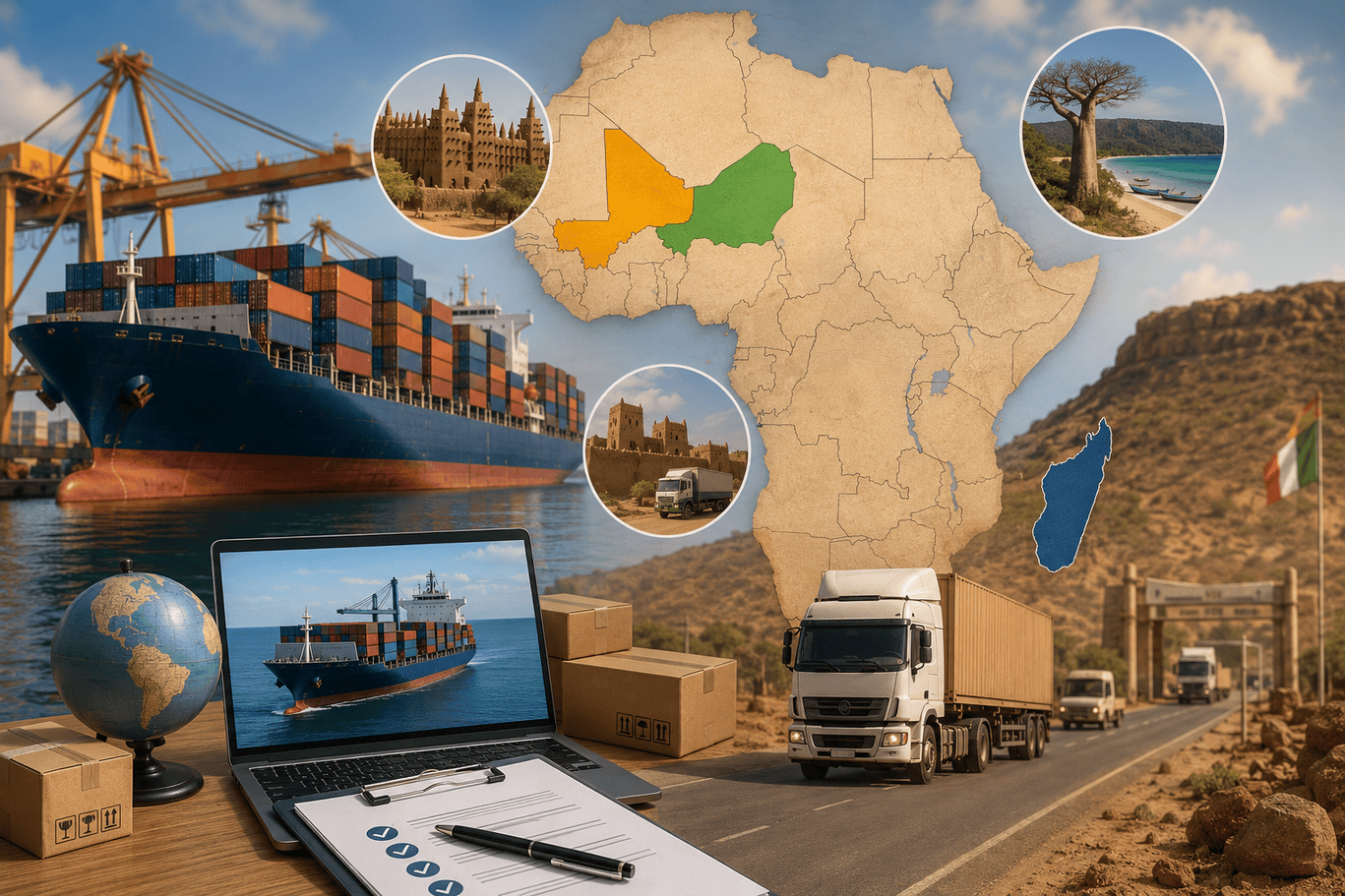
West Africa and the Indian Ocean islands represent some of the most active emerging trade corridors on the continent. Countries like Madagascar, Mali, and Niger are seeing growing volumes of imported goods ranging from food and construction materials to industrial equipment and consumer products. If your business is shipping to any of these destinations, there is one document you cannot afford to overlook: the Electronic Cargo Tracking Note.
Here is a practical, straightforward guide to ECTN requirements for these three destinations and how to get your certificates without the stress.
Why These Three Destinations Demand Extra Attention
Madagascar, Mali, and Niger each present their own logistical challenges. Madagascar is an island nation, meaning all cargo must arrive by sea or air with no land transit alternative. Mali and Niger are both landlocked countries, which means cargo typically arrives through neighboring coastal ports before traveling overland to its final destination. This adds complexity to documentation because transit country requirements may come into play in addition to the destination country ECTN.
Understanding these routes upfront saves a lot of trouble later.
ECTN for Madagascar
Madagascar has been enforcing its cargo tracking note requirement for several years and the system is well established. Any commercial cargo heading to the island must have a valid ECTN Madagascar certificate issued before the vessel departs. Given that all cargo must travel by sea, the departure port documentation window is your only opportunity to get this right. Late or missing certificates lead to immediate holds at the port of Toamasina, which is the country's main commercial port, and penalties can add up fast.
ECTN for Mali
Mali is a landlocked country that relies primarily on ports in Senegal, Guinea, and Ivory Coast for its international imports. Cargo heading to Mali must carry an ECTN Mali certificate regardless of which transit port is used. This is a point that catches many shippers off guard. They assume that because the cargo enters through a different country first, the Mali ECTN is not needed until later in the process. That assumption is wrong and costly. The certificate must be in place before the original vessel departs.
ECTN for Niger
Similar to Mali, Niger is a landlocked nation that depends on transit corridors running through Benin, Togo, and Nigeria for the bulk of its imports. The port of Cotonou in Benin is one of the most commonly used gateways for goods bound for Niger. Shippers must obtain a valid ECTN Niger certificate before departure, and any discrepancies in cargo descriptions or consignee details will cause problems both at the transit port and at the inland border crossing.
Given the length of these transit journeys, delays caused by documentation errors are especially disruptive and expensive.
How Seanautic Marine Handles It All
Managing ECTN certificates for island destinations, landlocked countries, and multi-transit routes all at once is not something most shippers want to handle on their own. That is exactly the kind of work Seanautic Marine specializes in. With experience covering all ECTN-mandatory African countries, the team understands the unique requirements of each destination and makes sure your certificates are issued correctly and on time, no matter how complex the routing.
From a single container to a regular freight program, Seanautic Marine gives shippers the confidence to move cargo into Africa without documentation surprises.
Ship to Madagascar, Mali, Niger, and beyond with full confidence. Contact Seanautic Marine at ectn-africa.com today to get your ECTN certificates issued quickly and correctly.
Frequently Asked Questions (FAQ's)
Find answers to common questions.
