Shipping to Madagascar for the First Time? A Plain-English Guide to the ECTN
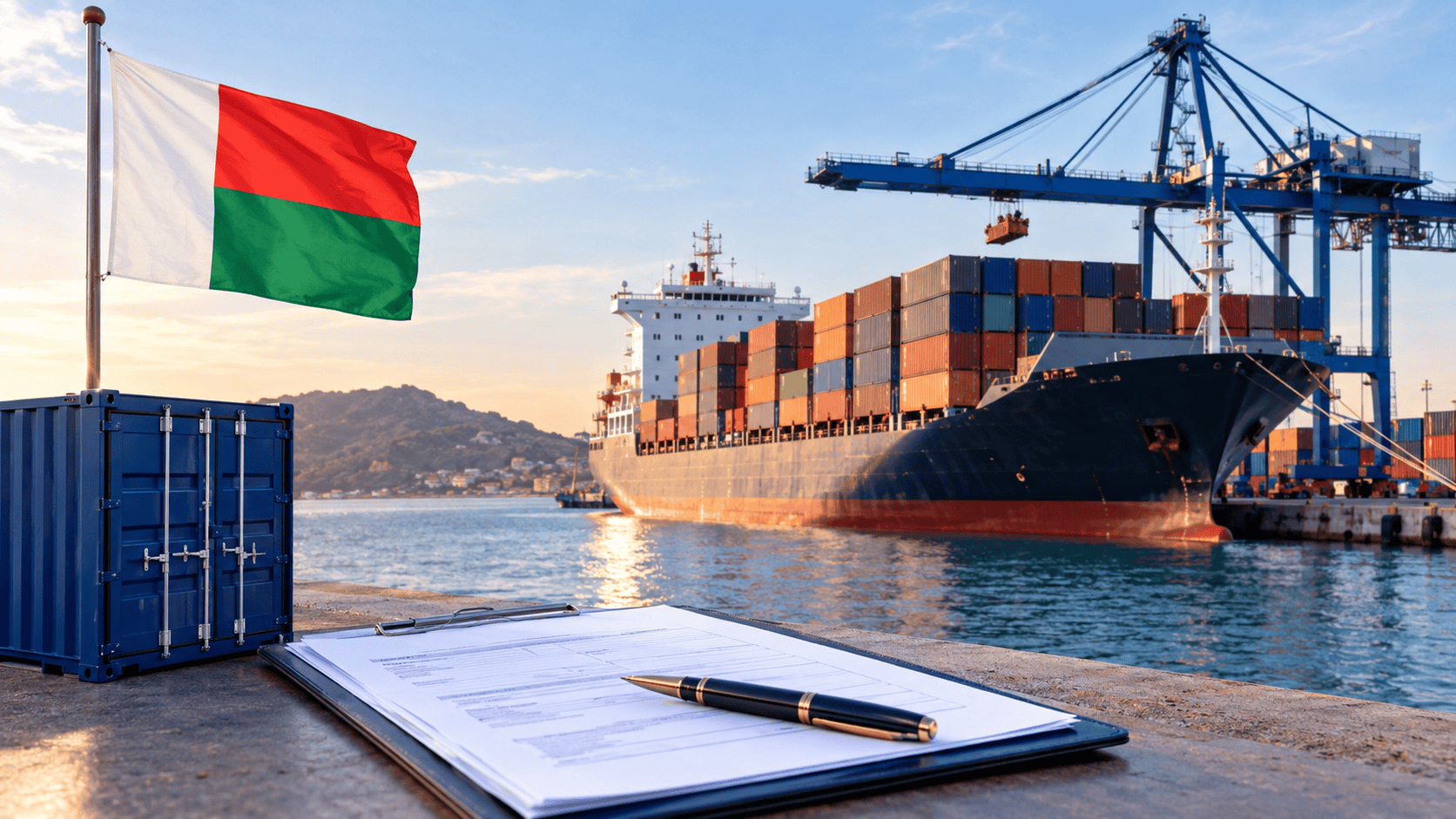
If you have just landed your first order from a buyer in Madagascar, the sales part was probably the easy bit. Then your forwarder says the shipment needs an "ECTN", a word you have never seen, and suddenly you are reading customs rules at 9 pm.
This guide is for you. It explains what an ECTN Madagascar document is, why it exists, what you need to send, and the questions first-time exporters usually hesitate to ask. It is based on what the ECTN-Africa website publishes and on carrier guidance for Madagascar, not on guesswork.
Apply for Your ECTN Madagascar →
So, What Is an ECTN?
An ECTN is an electronic Cargo Tracking Note. It is a loading document that lets Madagascar's customs side track a sea shipment and gather clearance information before the goods arrive. It is not a permit to trade and it is not a tax. Think of it as a required record that travels with your shipment's paperwork.
The requirement has been in place since 1 April 2007. According to Maersk's Madagascar import guidance, it replaced an earlier SGS inspection procedure and must be submitted electronically by the exporter or their forwarding agent before the goods are shipped.
Why So Many Names? ECTN, BSC, BESC, CTN
This is the first thing that trips people up. Searching for the document turns up four different labels, and it feels like four different products. It is not.
| Name | What it usually means |
| ECTN | Electronic Cargo Tracking Note, the general term |
| BSC | Bordereau de Suivi des Cargaisons, the French name used in Madagascar |
| BESC | The version used when the final destination is Antananarivo |
| CTN | Cargo Tracking Note, the shorter form |
The ECTN-Africa page treats these as one requirement for Madagascar, so you do not need to buy separate documents. You only need to tell us the final destination so the correct version is issued.
The Worries We Hear From First-Time Shippers
"I only ship once in a while. Does it still apply?"
Yes. The rule applies to every shipper sending goods to Madagascar, whatever the volume. A single carton by sea falls under it just as a full container does.
"Will this slow my shipment down?"
Only if it is left until the end. The note has to be in place before loading, so the sensible move is to start it when you receive the draft bill of lading, not on sailing day. We cannot quote a processing time here because the website does not publish one. What we can say is that sending complete, matching documents the first time removes the most common cause of delay.
"What if I get something wrong?"
Local customs will not release a shipment with an invalid ECTN. That is why accuracy matters more than speed. A wrong consignee spelling or a mismatched port is exactly the kind of error that creates trouble at the other end.
"Can I just do it myself?"
Registration routes exist. Maersk notes that the BSC can be registered online through the BSC homepage or via the BSC Technical Center in Madagascar. Many exporters still prefer to use a service provider because they want someone to check the documents before submission. That is a choice, not an obligation, and it depends on how comfortable you are with the process.
What You Will Need to Gather
Pull these together before you contact anyone. It takes about ten minutes when everything is in one folder.
Details to have ready:
- Shipper name and contact details
- Consignee name and contact details
- Names and contact details of the carriers
- Port of loading and port of discharge
- A clear description of the goods and their value
Documents to attach:
- Bill of Lading (required)
- Commercial Invoice (required)
- Freight Invoice (only needed if freight is not stated on the commercial invoice)
- Customs Export Declaration (optional)
Three Mistakes That Cost New Shippers Time
Using the wrong consignee spelling. Your buyer's company name on the invoice must be the same as on the bill of lading. Copy it, do not retype it.
Leaving the freight out. If the commercial invoice does not show freight, a separate freight invoice is required. Forgetting it stalls the application.
Starting too late. The requirement sits before shipment. Starting after the vessel sails is the single most stressful way to learn about it.
How Our Four-Step Process Works
Seanautic Marine runs ECTN-Africa as an independent service provider for cargo tracking notes from any origin to 22 African countries that require them. For Madagascar the process is short:
- Email your documents to ectn@seanauticmarine.com.
- We reply with a draft and an invoice.
- You approve the draft and pay.
- We send you the final validated ECTN or BESC.
You review the draft before anything is finalised, which is where most first-timers catch a small typo and save themselves a larger problem.
A Quick Word on Cost
Shippers often ask for a fixed price first. The ECTN-Africa Madagascar page does not publish fees, so we will not quote a figure in a blog post. Third-party guides give wide ranges, and those ranges differ by provider and by shipment. The reliable way to know your cost is to send your details and receive the invoice with the draft, since you approve and pay only after seeing it.
Pre-Shipment Checklist for Beginners
- Confirm the destination port in Madagascar and whether the final stop is Antananarivo.
- Request your draft bill of lading early.
- Make sure the invoice shows freight, or prepare a freight invoice.
- Compare shipper, consignee and goods description across all documents.
- Send everything together to one contact so nothing is lost between inboxes.
- Keep the final ECTN number with your shipping file for the buyer's clearing agent.
Get Help From a Real Person
Seanautic Marine, ECTN-Africa 20, rue Saint-Paul Ouest, Montreal, Quebec H2Y 1Y7 📞 +1 514 287 1812 | +1 514 312 1857 📧 ectn@seanauticmarine.com 🕗 Monday to Friday, 8:30 am to 5:00 pm
Frequently Asked Questions (FAQ's)
Find answers to common questions.
