ECTN Senegal: Required Documents, Application Steps and Common Mistakes
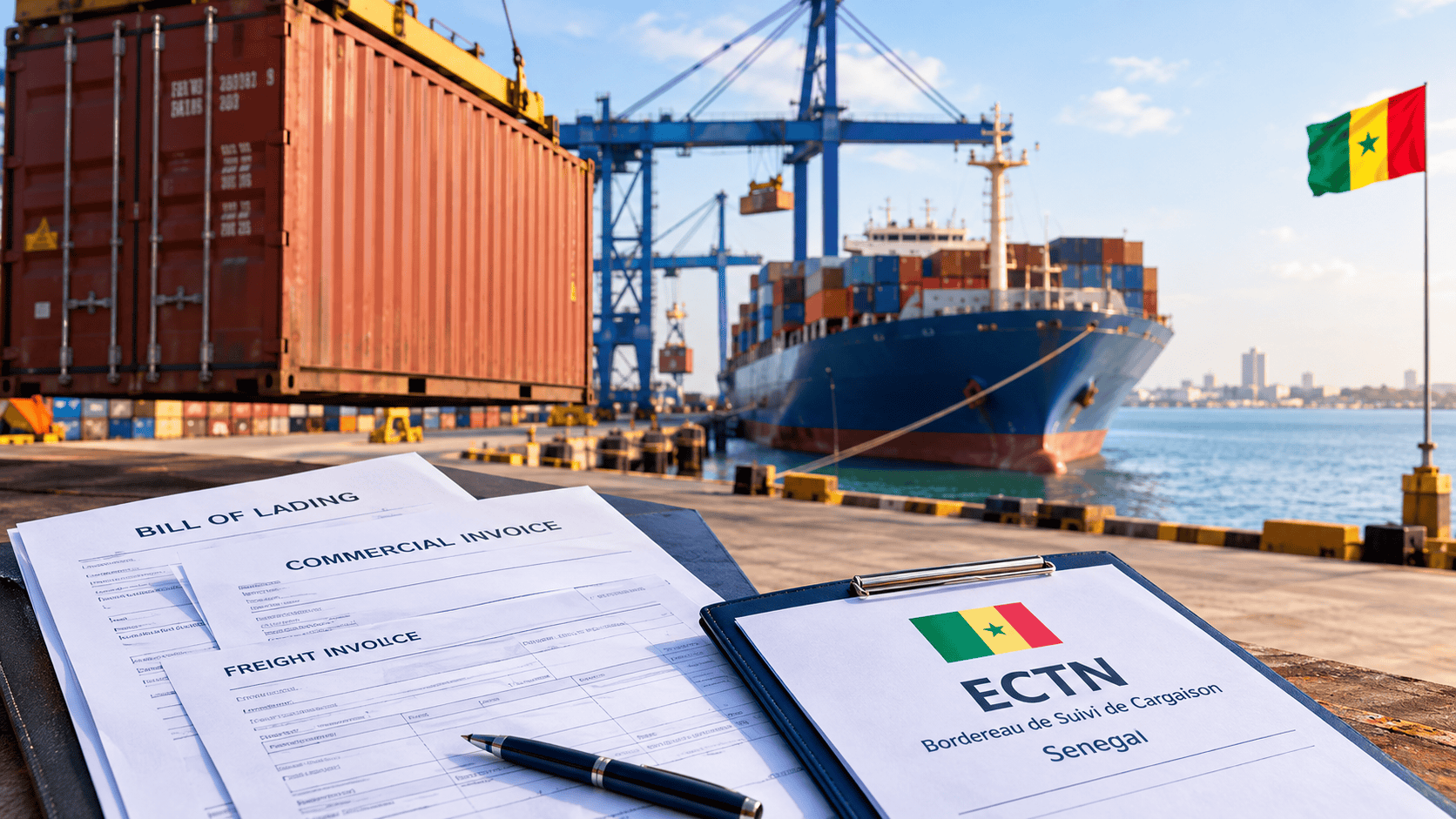
Planning a shipment to Senegal involves more than arranging transport and preparing customs paperwork. An ECTN Senegal certificate is an important part of the cargo documentation process, and missing or inconsistent information can create problems when a shipment reaches its destination. Knowing which documents to prepare, when to submit them and what to check before approval can help your team avoid preventable complications.
Request an ECTN Senegal Quote from Seanautic Marine to discuss the documentation needed for your shipment.
What Is an ECTN Senegal Certificate?
An Electronic Cargo Tracking Note, or ECTN, is a shipment-related document used by certain African countries to collect information about cargo before it arrives. For Senegal, the certificate is commonly referred to as a BSC, short for Bordereau de Suivi de Cargaison. The terminology can vary between countries, so it is important to confirm the correct certificate for the destination.
The document connects important shipment details, including the shipper, consignee, cargo, ports and transport information. These details help the relevant parties identify the shipment and support the required cargo documentation process.
For businesses shipping goods to Dakar or other Senegalese destinations, the practical concern is straightforward: the required certificate needs to be prepared and validated in accordance with the applicable procedure. It should not be treated as paperwork to sort out only after the vessel has arrived.
Which Documents Are Needed for ECTN Senegal?
The documents commonly listed for an ECTN Senegal application are the Bill of Lading, commercial invoice and freight invoice where the freight amount is not already stated on the commercial invoice. The exact requirements should be confirmed when the shipment details are reviewed.
1. Bill of Lading
The Bill of Lading records key details about the shipment and its carriage. Check the shipper and consignee names, cargo description, ports and other shipment particulars before submitting it.
If the Bill of Lading is still a draft, tell your service provider at the start. The process for preparing a draft certificate can differ from the steps needed to validate the final document.
2. Commercial invoice
The commercial invoice provides the transaction and goods information. Before submission, make sure the seller and buyer details, description of the goods, values and other relevant information are consistent with the supporting shipment documents.
For example, if the invoice describes a shipment as industrial spare parts but the transport documents use a substantially different description, ask your shipping team to resolve the discrepancy before approval.
3. Freight invoice
A freight invoice is generally needed if the freight amount is not specified on the commercial invoice. Keep the amount and shipment references consistent across the relevant records.
Do not assume that a missing freight amount can be ignored. Confirm the requirement before submitting the file.
4. Additional shipment information
Depending on the application procedure, you should be ready to provide contact details for the shipper and consignee, loading and discharge ports, expected departure and arrival information, and a clear description of the goods. Confirm any additional information required for your specific shipment before the application is finalised.
How to Apply for an ECTN Senegal Certificate
The application process is easier to manage when the documents are prepared together and the responsible person is clear at each stage.
Step 1: Prepare the shipment documents. Gather the Bill of Lading, commercial invoice and applicable freight invoice. Check the details before sending the file.
Step 2: Submit the documents. Send the scanned copies to Seanautic Marine for review using the contact details on the Senegal ECTN service page.
Step 3: Review the draft and invoice. Once the draft is provided, compare it with the shipment documents. Check names, ports, cargo information and other particulars carefully.
Step 4: Approve the draft and complete payment. Confirm that the information is correct before giving approval. If something needs to be changed, raise it before the certificate is finalised.
Step 5: Receive the validated certificate. Follow the provider's instructions for completing validation and obtaining the final document. Make sure the relevant parties receive the approved version.
This is the process published on the Seanautic Marine page. The timing of each stage depends on document completeness, approval and the applicable validation procedure.
Common Mistakes That Can Delay Your Shipment
Small documentation errors can become time-consuming when they are discovered late. These are the checks worth making before an application is submitted.
Inconsistent shipper or consignee details
Differences in company names, contact details or consignee information can prompt questions or corrections. Use the correct details across the Bill of Lading, invoice and application.
An unclear cargo description
A vague or inconsistent description makes it harder to verify that the documents relate to the same shipment. Use accurate descriptions that match the commercial and transport records.
Missing freight information
If freight is not stated on the commercial invoice, check whether a separate freight invoice is required. Sending an incomplete file can interrupt the review process.
Approving a draft without checking it
A draft should be reviewed against the source documents, not simply approved because it looks complete. Check the ports, names, cargo particulars and shipment references line by line.
Leaving the application until the last minute
Late preparation leaves less time to resolve discrepancies or obtain missing paperwork. Start the process as soon as the required shipment details are available, and confirm the applicable submission and validation deadlines with your provider and shipping line.
When Should You Start the ECTN Process?
Start preparing the application as early as your shipment documentation allows. The relevant deadline depends on the current Senegalese procedure and the shipping arrangements, so do not rely on a general online article as confirmation of the deadline for your particular cargo.
A practical approach is to assign one person to collect the documents, another to verify the draft if your organisation requires a second check, and a named contact to approve the final details. This is especially useful when the exporter, freight forwarder and consignee are working in different time zones.
Before cargo is loaded, confirm with your service provider and carrier that the required certificate has been handled in line with the applicable rules. Do not assume that a draft or reference number is equivalent to a validated certificate.
Why Work With Seanautic Marine?
Seanautic Marine provides cargo tracking note services for multiple African destinations, including Senegal. Its published process gives customers a defined sequence: submit the documents, receive a draft and invoice, approve the draft and complete payment, then receive the validated certificate.
That structure is useful when several parties are coordinating the same shipment. It also gives the shipper a clear point at which to review the draft before finalisation.
To discuss the documentation for your cargo, visit the ECTN Senegal service page, call +1 514 287 1812 or +1 514 312 1857, or email ectn@seanauticmarine.com. Confirm the requirements and expected processing steps before relying on a particular shipment schedule.
Prepare Your Senegal Shipment Documentation Early
The easiest documentation problems to solve are the ones identified before a shipment is ready to depart. Gather the required invoices and transport documents, check that the details match, and review the draft before approving it.
Request an ECTN Senegal Quote from Seanautic Marine to discuss your shipment and confirm the required documentation.
Frequently Asked Questions (FAQ's)
Find answers to common questions.
